
Titus Morebu
Author
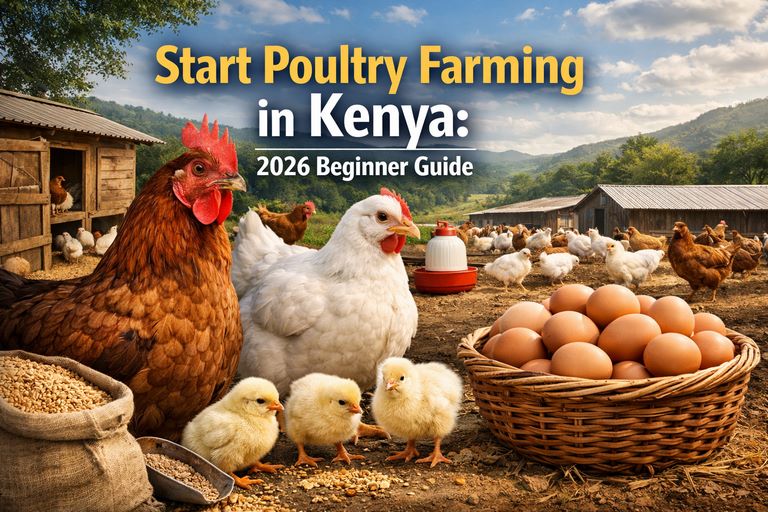
Start Poultry Farming in Kenya: 2026 Beginner Guide
Learn how to start poultry farming in Kenya profitably in 2026 with costs, breeds, housing, feeding, and expert tips for beginners.
🐔 Introduction to Poultry Farming in Kenya
Poultry farming in Kenya remains one of the most profitable agribusiness ventures in 2026. With increasing demand for eggs and chicken meat in urban and rural areas, many beginners are turning to poultry as a reliable income source.
The sector contributes significantly to Kenya’s agricultural economy and supports millions of livelihoods. Whether you’re starting in your backyard or planning a commercial farm, poultry farming offers flexible entry with scalable growth.
📊 Why Poultry Farming is Profitable in Kenya
- High demand: Eggs and chicken are staple foods in most Kenyan households, hotels, and institutions.
- Fast returns: Broilers mature in 5–8 weeks, while layers start producing eggs in about 18–24 weeks.
- Low startup capital: You can start small and expand gradually.
- Multiple income streams: Earn from eggs, meat, manure, and breeding.
According to industry data, Kenya produces over 110,000 tonnes of poultry meat annually, with indigenous chicken accounting for the majority of the flock.
🐣 Types of Poultry Farming You Can Start
1. Layers Farming (Egg Production)
Layers are raised specifically for egg production. They begin laying eggs at around 18–20 weeks.
- Produces consistent daily income
- Requires good feeding and disease control
- Common breeds: ISA Brown, Lohmann
2. Broiler Farming (Meat Production)
Broilers are bred for fast meat production and mature within 5–8 weeks.
- Quick returns on investment
- High feed consumption
- Ideal for short-term profits
3. Kienyeji (Indigenous Chicken Farming)
Improved kienyeji chicken is becoming the most profitable option for many farmers in 2026.
- Egg trays sell between KSh 700–850
- Lower feeding costs due to scavenging ability
- High disease resistance
- Preferred by health-conscious consumers
💰 Cost of Starting Poultry Farming in Kenya (Beginner Estimate)
| Item | Estimated Cost (KSh) |
|---|---|
| 50 Chicks | 5,000 – 10,000 |
| Housing (small coop) | 20,000 – 50,000 |
| Feed (first 2–3 months) | 15,000 – 30,000 |
| Vaccination & Vet | 2,000 – 5,000 |
| Equipment (feeders, drinkers) | 3,000 – 10,000 |
| Total | 45,000 – 105,000 |
💡 Tip: Start small, learn the process, then scale gradually to reduce risk.
🏡 Poultry Housing Requirements
A good poultry house protects birds from predators, harsh weather, and diseases.
- Ensure proper ventilation to reduce heat and ammonia buildup
- Maintain cleanliness to prevent infections
- Provide enough space (avoid overcrowding)
- Use affordable materials like timber, mesh, and iron sheets
You can build a simple structure or scale to larger housing depending on your budget.
🌽 Feeding Your Poultry
Feed accounts for 70–75% of total production costs, making it the most important factor in profitability.
- Starter feed (chicks)
- Growers mash (developing birds)
- Layers mash (egg production)
In 2026, a 50kg bag of layers mash costs around KSh 3,500–3,900. To reduce costs, many farmers supplement with:
- Azolla (high-protein aquatic plant)
- Black Soldier Fly larvae
- Kitchen waste and greens
👉 Learn more about poultry nutrition from poultry feed basics and formulation.
💉 Vaccination and Disease Control
Diseases are one of the biggest risks in poultry farming. A proper vaccination schedule is essential.
- Newcastle disease
- Gumboro disease
- Fowl typhoid
Maintain strict hygiene and limit visitors to your farm to improve biosecurity.
👉 Explore animal health practices from FAO poultry health guidelines.
📈 Marketing Your Poultry Products
Profitability depends heavily on how you sell your products.
- Sell directly to consumers for higher margins
- Supply hotels, restaurants, and schools
- Use social media and WhatsApp groups
- Avoid relying entirely on middlemen
Direct sales often yield better profits compared to farm-gate sales.
⚠️ Common Mistakes Beginners Should Avoid
- Starting too big without experience
- Poor record keeping
- Ignoring vaccination schedules
- Using low-quality feed
- Overcrowding birds
🚀 Tips for Success in 2026
- Start with improved kienyeji for better resilience
- Reduce feed costs through supplementation
- Track all expenses and profits
- Invest in proper housing and hygiene
- Build direct market connections
✅ Final Thoughts
Poultry farming in Kenya is still one of the most accessible and scalable agribusiness opportunities today. With proper planning, good management, and market awareness, beginners can turn a small poultry project into a highly profitable enterprise.
Start small, stay consistent, and reinvest your profits — that’s the formula for long-term success in poultry farming.
Gallery
Related Articles
3 articles
How to Make Money While Sleeping in Kenya (2026)
Discover proven passive income ideas in Kenya that earn you money 24/7, even while you sleep. Learn realistic strategies, tools, and income potential.

Best Side Hustles for Students in Kenya (2026 Guide)
Discover the best side hustles for students in Kenya. Learn how to earn money online and offline with low capital and flexible schedules.

Trending Businesses in Kenya Right Now (2026 Guide)
Discover trending businesses in Kenya right now in 2026. Learn profitable ideas, startup costs, and how to succeed in today’s evolving economy.