
Titus Morebu
Author
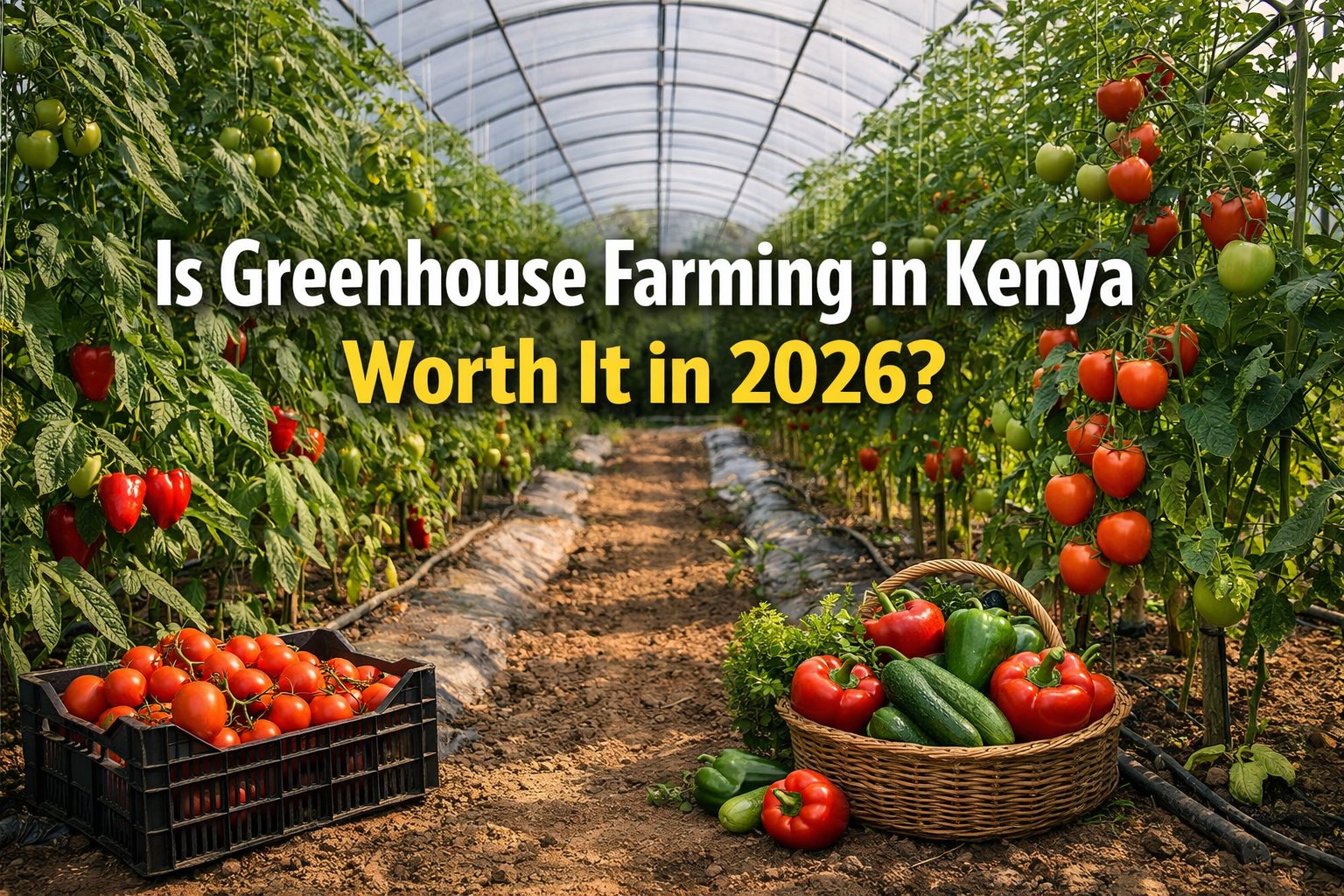
Is Greenhouse Farming in Kenya Worth It in 2026?
Discover if greenhouse farming in Kenya is profitable in 2026, including costs, returns, crops, risks, and expert tips for beginners.
🌱 Greenhouse farming in Kenya has become one of the most talked-about agribusiness opportunities in recent years. With rising food demand, shrinking land sizes, and unpredictable weather patterns, many farmers are turning to controlled environment agriculture. But the big question remains: Is greenhouse farming in Kenya really worth it in 2026?
This detailed guide breaks down the costs, profits, risks, and real opportunities to help you make an informed decision.
🌿 What is Greenhouse Farming?
Greenhouse farming involves growing crops inside a structure covered with transparent materials such as polythene or glass. This setup allows farmers to control key factors like temperature, humidity, and irrigation.
Unlike traditional open-field farming, greenhouses protect crops from pests, diseases, and harsh weather conditions, leading to higher yields and better-quality produce.
📊 Why Greenhouse Farming is Growing in Kenya
- Unpredictable weather: Climate change has made rainfall unreliable, making controlled farming more attractive.
- High urban demand: Cities like Nairobi, Mombasa, and Kisumu have a growing demand for fresh vegetables.
- Limited land: Small plots can generate high income when used efficiently.
- Export opportunities: Crops like capsicum and tomatoes have strong regional and international demand.
💰 Cost of Starting a Greenhouse in Kenya
The cost varies depending on size, materials, and technology level. Here’s a breakdown for a standard 8m x 15m greenhouse:
- Greenhouse structure: KSh 120,000 – KSh 300,000
- Drip irrigation system: KSh 15,000 – KSh 40,000
- Seedlings: KSh 2,000 – KSh 8,000
- Fertilizers & chemicals: KSh 10,000 – KSh 30,000
- Labor & maintenance: KSh 5,000 – KSh 20,000
👉 Total estimated startup cost: KSh 150,000 – KSh 400,000
📈 Expected Profits from Greenhouse Farming
Profitability depends on the crop, management practices, and market access. Here’s a realistic example using tomatoes:
- Plants per greenhouse: 800 – 1,000
- Yield per plant: 10 – 15 kg
- Total yield: 8,000 – 15,000 kg
- Average price per kg: KSh 50 – KSh 120
💡 Estimated revenue per cycle: KSh 400,000 – KSh 1,200,000
After expenses, farmers can make KSh 150,000 – KSh 500,000 per season depending on efficiency.
🥬 Best Crops for Greenhouse Farming in Kenya
- Tomatoes: High demand and consistent returns if well managed.
- Capsicum (bell peppers): Premium market prices, especially for export.
- Cucumbers: Fast-growing and suitable for beginners.
- Strawberries: High value but require more expertise.
- Leafy greens: Quick turnover and steady income.
⚠️ Challenges of Greenhouse Farming
Despite its potential, greenhouse farming is not risk-free. Here are common challenges:
- High initial investment: Startup costs can be a barrier for many farmers.
- Technical knowledge: Poor management can lead to huge losses.
- Pest and disease outbreaks: Can spread quickly in enclosed spaces.
- Market fluctuations: Prices for crops like tomatoes can drop suddenly.
- Maintenance costs: Repairs and inputs can reduce profits.
📚 Expert Tips to Succeed
- Start small: Test with one greenhouse before scaling up.
- Choose the right crop: Focus on high-demand, high-value crops.
- Invest in training: Learn modern farming techniques.
- Secure a market first: Identify buyers before planting.
- Maintain proper records: Track expenses and profits carefully.
🌍 Learn More About Modern Farming
To deepen your understanding, explore these resources:
- understand greenhouse farming principles
- explore agricultural research and innovations in Kenya
- learn about global best practices in agriculture
🤔 Is Greenhouse Farming Worth It in Kenya?
✔️ Yes — but only if done right.
Greenhouse farming can be highly profitable in Kenya, especially in 2026 where food demand continues to rise. However, success depends on proper planning, good management, and access to reliable markets.
If you treat it as a serious business—not a trial project—you can achieve consistent income and long-term growth.
🚀 Final Thoughts
Greenhouse farming is not a get-rich-quick scheme, but it is one of the most promising agribusiness ventures in Kenya today. With the right knowledge, discipline, and strategy, it can generate sustainable income and financial independence.
🌱 Whether you're a beginner or an experienced farmer, this could be your opportunity to step into modern, profitable agriculture.
Gallery
Related Articles
3 articles
10 AI Business Ideas in Kenya for Beginners (2026)
Discover 10 profitable AI business ideas in Kenya for beginners. Learn how to start, tools to use, and realistic earnings in KES today.

How to Make Money with AI in Kenya (2026 Guide)
Discover proven ways to use AI to earn money online in Kenya in 2026, from freelancing to digital products and automation services.

Faceless YouTube Channels That Make Money in Kenya
Discover profitable faceless YouTube channel ideas in Kenya, how they work, monetization strategies, and how to start earning online in 2026.