
Titus Morebu
Author
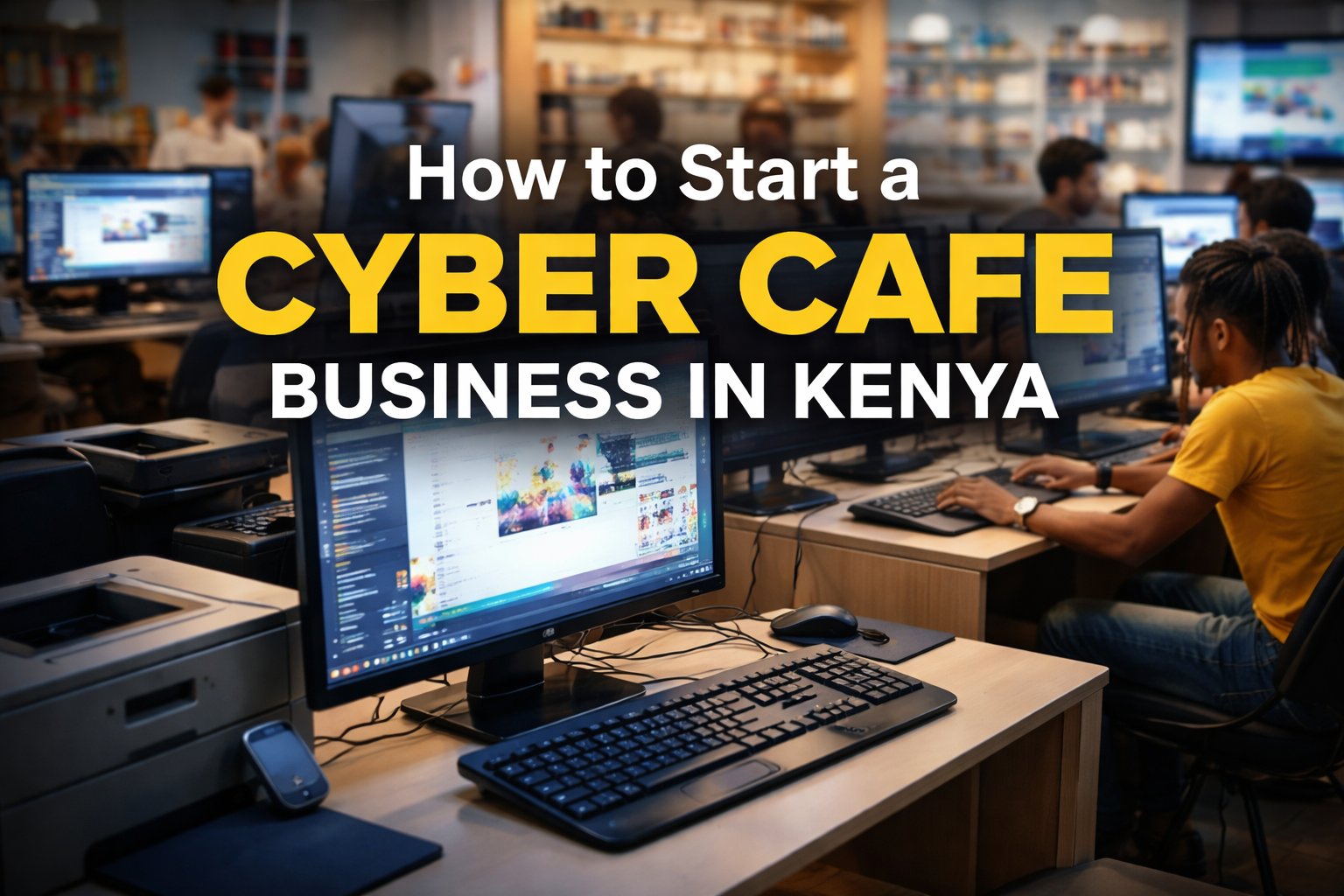
How to Start a Cyber Cafe Business in Kenya (2026)
Learn how to start a profitable cyber cafe in Kenya with costs, licenses, equipment, and expert tips for success in 2026.
💻 Introduction
Starting a cyber cafe business in Kenya remains a profitable venture in 2026, especially in areas with high demand for internet services, printing, online applications, and digital services. With the rise of eCitizen services, online jobs, and digital learning, cyber cafes continue to play a vital role in bridging the digital divide.
This guide walks you through everything you need to know—from startup costs and licenses to equipment and strategies for maximizing profits.
📊 Why Start a Cyber Cafe Business in Kenya?
- High demand for online services: Many Kenyans rely on cyber cafes for services like KRA returns, HELB applications, and job applications.
- Low to moderate startup costs: Compared to other tech businesses, a cyber cafe is relatively affordable to start.
- Multiple income streams: Beyond browsing, you can offer printing, scanning, typing, and mobile money services.
- Growing digital economy: Government and private sector services are increasingly online.
📍 Best Locations for a Cyber Cafe
Location is critical to success. Ideal areas include:
- Near universities and colleges 🎓
- Busy towns and shopping centers 🏙️
- Residential estates with limited home internet 🏘️
- Near government offices or huduma centers
💰 Startup Costs Breakdown (Kenya)
Here’s an estimated budget for starting a small to medium cyber cafe:
- Computers (5–10 units): Ksh 20,000 – 40,000 each (refurbished)
- Furniture (desks & chairs): Ksh 20,000 – 50,000
- Internet installation & router: Ksh 5,000 – 15,000
- Printer & scanner: Ksh 15,000 – 40,000
- Licenses & permits: Ksh 10,000 – 30,000
- Rent (deposit + 1 month): Ksh 20,000 – 80,000 (depends on location)
- Power backup (UPS/Inverter): Ksh 10,000 – 50,000
Estimated Total: Ksh 150,000 – 500,000
📜 Licenses and Legal Requirements
To operate legally in Kenya, you need:
- Business permit: From your county government
- KRA PIN registration: For tax compliance
- Music license: If playing music publicly
- Fire safety compliance: Basic safety measures required
Learn more about business registration on eCitizen Kenya portal.
🖥️ Equipment Needed
- Desktop computers or laptops
- High-speed internet connection (fiber recommended)
- Printer (laser preferred for cost efficiency)
- Scanner and photocopier
- Networking equipment (router, switches)
- Backup power (UPS or inverter)
🌐 Choosing the Right Internet Provider
Reliable internet is the backbone of your business. Consider providers like Safaricom, Zuku, or Faiba based on availability in your area.
Compare plans and speeds on Safaricom Home Fibre to find a suitable package.
💡 Services to Offer for Maximum Profit
Don’t rely on browsing alone. Diversify your services:
- Printing & photocopying: High demand daily
- Scanning & document processing: For job applications
- Online services: KRA, HELB, NTSA, passport applications
- Typing & CV writing: Charge per page
- Lamination & binding: Extra income stream
- Mobile money services: M-Pesa agency
📈 Pricing Strategy
Set competitive prices based on your location:
- Browsing: Ksh 1–3 per minute
- Printing: Ksh 10–20 per page (black & white)
- Scanning: Ksh 20–50 per page
- Typing: Ksh 50–100 per page
📣 Marketing Your Cyber Cafe
- Signage: Clear and visible branding
- Social media: Promote services on Facebook and WhatsApp
- Word of mouth: Offer great service to build reputation
- Student offers: Discounts attract loyal customers
Learn digital marketing basics from HubSpot resources.
⚡ Tips for Success
- Ensure fast internet: Slow speeds drive customers away
- Maintain equipment: Regular updates and repairs
- Offer excellent customer service: Be helpful and friendly
- Keep software updated: Avoid security risks
- Track expenses and income: Monitor profitability
⚠️ Challenges to Expect
- High competition in urban areas
- Power outages
- Decline in basic browsing due to smartphones
Solution: Focus on value-added services like printing, online applications, and digital assistance.
🚀 Conclusion
A cyber cafe business in Kenya can still be highly profitable if you adapt to current trends and offer more than just internet access. By choosing the right location, investing in reliable equipment, and diversifying your services, you can build a sustainable and thriving business.
Start small, grow steadily, and stay updated with digital trends to remain competitive in the evolving Kenyan market.
Gallery
Related Articles
3 articles
10 AI Business Ideas in Kenya for Beginners (2026)
Discover 10 profitable AI business ideas in Kenya for beginners. Learn how to start, tools to use, and realistic earnings in KES today.

How to Make Money with AI in Kenya (2026 Guide)
Discover proven ways to use AI to earn money online in Kenya in 2026, from freelancing to digital products and automation services.

Faceless YouTube Channels That Make Money in Kenya
Discover profitable faceless YouTube channel ideas in Kenya, how they work, monetization strategies, and how to start earning online in 2026.