
Titus Morebu
Author
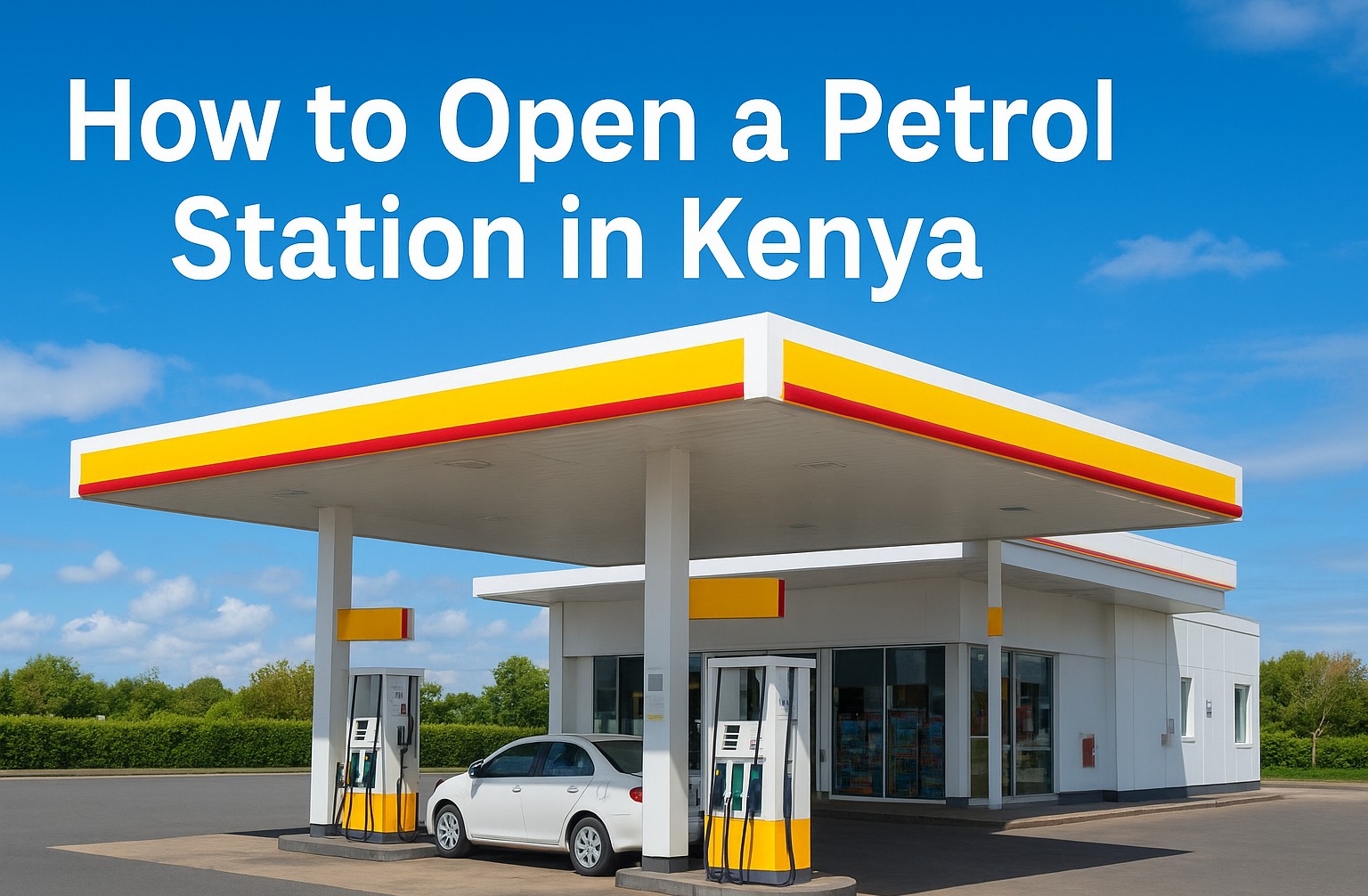
How to Open a Petrol Station in Kenya: A Step-by-Step Guide ⛽
Learn the full process of opening a petrol station in Kenya — from planning, licensing, construction, to operations — with expert tips to succeed.
How to Open a Petrol Station in Kenya: A Complete Guide
Thinking of launching a petrol station in Kenya and looking for a reliable, up-to-date roadmap? You’re in the right place. This guide walks you through every stage — legal, financial, technical, and operational — to help you turn your dream into a profitable reality. 💡
1. Why a Petrol Station Business in Kenya?
The fuel sector in Kenya remains one of high demand and essential service. Vehicles, industrial users, and rural areas all depend on reliable access to petrol and diesel. While margins per litre are slim, the volume and ancillary services (shops, car wash, convenience store) can turn it into a sustainable business with correct execution.
Key advantages
- Steady demand, especially along highways and growing urban zones
- Potential for multiple income streams (fuel, retail shop, services)
- Opportunities to partner with major oil marketing companies or develop your brand
Main challenges to plan around
- High upfront capital investment
- Strict regulatory and safety compliance requirements
- Operating risks (spills, theft, fuel price volatility)
- Thin margins per litre; success depends on volume
2. Market Research & Feasibility Study
Before diving in, invest time in understanding your proposed location, competition, supply chain, and cash flow dynamics.
Essential analyses to perform
- Traffic flow & visibility: sites on major roads, commuter routes, or near industrial zones often perform better.
- Competition map: identify existing stations within a radius, their strengths, pricing, and services.
- Catchment demographics: population density, vehicle ownership, income levels around the area.
- Accessibility & road authority approvals: check if you need authorization from Kenya National Highways Authority (KeNHA) or Kenya Urban Roads Authority (KURA) for access ramps or lanes.
- Fuel supply logistics: where your fuel will come from (oil marketing company, depot, pipeline), cost of transport, reliability.
- Regulatory risk assessment: how zoning, environmental, or safety rules can impact your operations.
Use a financial model projecting capital expenditure (CAPEX), operating costs (OPEX), revenue streams, and break-even scenarios.
3. Business Structure & Registration
You’ll need to set up a legal business entity in Kenya before applying for licences and permits.
Key steps
- Register your company (limited company or other legal form) with the Kenya Registrar of Companies.
- Obtain a PIN, VAT registration, and necessary tax certificates from Kenya Revenue Authority.
- Open a business bank account and prepare audited financial statements (or projections).
4. Licenses, Permits & Regulatory Compliance
This is a critical phase. You must comply with multiple government agencies and secure various licences before construction or operation.
Key authorities and permits
| Authority / Agency | Licence / Permit | Purpose / Notes |
|---|---|---|
| Energy & Petroleum Regulatory Authority (EPRA) | Petrol service station construction permit | Free permit; evaluation within 45 days for construction proposals. Online application via EPRA portal. |
| EPRA | Retail petroleum business licence (except LPG) | Valid for one year. Approval via EPRA’s License Management system. Licences are processed in about 30 days once documentation is complete. |
| National Environment Management Authority (NEMA) | Environmental Impact Assessment (EIA) / Environmental Licence | Required for new construction to assess pollution, drainage, safety risks, etc. |
| County Government / Physical Planning | Development permission / construction permit | Approvals for land use, building plans, fire safety, etc. |
| Road Authorities (KeNHA / KURA) | Access ramp / auxiliary lane permit | If your station sits alongside a national or urban road, deviations or lanes need road authority approval. |
| Fire Department & Health Department | Fire certificate, safety inspection, health permit | Essential for handling flammable liquids and risk mitigation. |
| County / Municipal | Business permit, signage permit, local licensing | Required under local trade laws. |
Documentation checklist
- Certificate of Incorporation / company registration documents
- IDs / passports of directors
- Proof of land ownership or long-term lease agreement
- Detailed engineering drawings (civil, mechanical, electrical) for tanks, forecourt, pipe layout
- Traffic impact assessments, drainage plans, site layout
- Environmental studies and mitigation plans
- Road access plans and approvals for ramps/lanes
- Tax compliance certificate and KRA registration
- Business permit application to county
5. Estimating Capital & Investment Costs
Be realistic with your budget — costs can escalate due to construction, regulatory work, and procurement delays.
Major cost components
- Land acquisition or lease cost: prime sites cost more but yield higher volumes.
- Construction of buildings & forecourt: civil work, paving, canopy construction.
- Underground storage tanks & piping: high safety standards, leak detection, multiple compartments.
- Fuel dispensing pumps & instrumentation: digital dispensers, breakaway valves, safety features.
- Electrical systems & automation: power supply, control systems, lighting, backup power.
- Fuel inventory: initial cost to stock petrol / diesel (or other fuels).
- Signage, branding & marketing: to make your station visible and credible.
- Licensing, consultancy & professional fees: architects, engineers, regulatory consultants.
- Operational setup: POS systems, security systems, staffing, training.
For small-scale legal setups, expect startup capital in the range of **KSh 5 million to KSh 10 million** (or more) depending on scale and location. Even fuel pumps alone can cost KSh 250,000–300,000 each; tanks may cost KSh 300,000–500,000 depending on capacity. Keep a buffer for overruns.
6. Designing & Building the Station
With permits in place, you move into construction and site preparation.
Key design considerations
- Layout & safety distances: ensure safe spacing between tanks, pumps, property boundaries, and buildings.
- Forecourt drainage & spill control: oil separators, drains, containment bunds.
- Ventilation & fire mitigation: vapour recovery, fire suppression systems, emergency exits.
- Electrical grounding & explosion protection: intrinsically safe design, bonding, explosion proof fixtures.
- Lighting, signage & visibility: proper lighting for security and attracting customers.
- Convenience retail & services: space for shop, restrooms, car wash bay, air/water service points.
- Security systems: cameras, alarms, staff control rooms.
During construction, conduct regular inspections, involve safety officers, and ensure regulatory compliance at every stage to avoid rework or permit revocations.
7. Fuel Supply & Contracts
Securing a reliable fuel supply is central to your operation.
Options and tips
- Partner with a major Oil Marketing Company (OMC): many independent fuel stations affiliate with national brands for supply, branding support, training, and discounts.
- Depot supply or pipeline drops: if close to depots or pipeline nodes, negotiate delivery terms to minimize transport cost.
- Fuel quality & audits: conduct periodic testing and audits to guard against contamination or supplier mismanagement.
- Contract terms: negotiate volumes, pricing, delivery schedules, payment terms, liabilities.
- Back-up supply options: have emergency alternative suppliers in case of supply disruptions.
8. Staffing, Training & Operations Setup
Once your station is physically ready, set up systems, processes, and human resources.
Core operational elements
- Staff recruitment: pump attendants, cashiers, mechanics, cleaners, security staff.
- Training & safety drills: fire response, spill containment, customer service, use of equipment.
- Point of Sale (POS) system & software: manage fuel sales, retail shop, inventory, accounting.
- Operational procedures: opening/closing, reconciliation, daily checks, dispensing protocols.
- Security policy: cash handling, surveillance, staff rotas, emergency response plans.
- Maintenance plan: ensure pumps, tanks, dispensers, electrical systems are regularly inspected.
9. Launch, Marketing & Community Engagement
Your launch sets the tone. Get noticed early and build trust with customers.
Suggested tactics
- Run a soft opening to test flows, staff readiness, systems.
- Offer promotional discounts on fuel or store items during early days to attract customers.
- Leverage signage, billboards, online listings/maps to make your station visible.
- Partner with local businesses, transporters or fleets for bulk fuel contracts.
- Ensure excellent customer service and reliability from day one to build loyalty.
10. Monitoring, Scale & Risk Management
As business stabilizes, monitor performance and adapt strategies.
Key metrics to track
- Litres sold per day / per pump
- Gross margin per litre and retail margin
- Shop / service revenue contribution
- Inventory shrinkage / theft / losses
- Operating cost ratios (staff, utilities, maintenance)
- Customer satisfaction & complaints
Strategies for growth & mitigation
- Consider adding more services (auto repair, car wash, mini-mart) to boost margins.
- Expand to adjacent sites or franchise your concept over time.
- Carry insurance for environmental liability, fire, theft, third-party claims.
- Stay compliant with evolving regulations (fuel standards, safety, tax changes).
- Implement preventive maintenance and periodic audits to detect leaks or losses early.
Conclusion & Next Steps
Opening a petrol station in Kenya is a capital-intensive, highly regulated venture — but with the right planning, compliance, and operations, it can be a profitable business over time. Follow each of these steps carefully: conduct deep market research, secure proper licences, partner with reliable fuel suppliers, and run operations with strict safety and efficiency norms.
Ready to get started? Your next milestones: finalize your business plan & financial model, choose a site and begin permit applications. Stay persistent and meticulous — success in the fuel industry rewards those who balance vision with compliance. 🚀
Note: Always verify current rules and rates directly with EPRA (epra.go.ke) and county authorities before launching.
Gallery
Related Articles
3 articles
How to Make Money While Sleeping in Kenya (2026)
Discover proven passive income ideas in Kenya that earn you money 24/7, even while you sleep. Learn realistic strategies, tools, and income potential.

Best Side Hustles for Students in Kenya (2026 Guide)
Discover the best side hustles for students in Kenya. Learn how to earn money online and offline with low capital and flexible schedules.

Trending Businesses in Kenya Right Now (2026 Guide)
Discover trending businesses in Kenya right now in 2026. Learn profitable ideas, startup costs, and how to succeed in today’s evolving economy.